
SEO is NOT science. It's not a complex topic if you have a proper SEO strategy.
But do you know whether your SEO strategy is working or not?
Okay let me ask you a simple question. Do you even have a SEO strategy for your website?
If not, you're missing a ton of search traffic and money on the table. If you already have a SEO strategy but struggling to get results, this is the time to fix your strategy. In this detailed guide, let's talk about how you can build a solid SEO strategy from scratch. We'll also discuss about whether your content strategy is working or not.
Why you need SEO strategy?So, you have heard about SEO and understood that it works very well for different kinds of online business. You may be wondering why it is that much powerful.
You need SEO strategy as it will allow you to connect with those searching for your product or service and help turn them into customers.
To promote your business and obtain new clients, you need SEO. Blogging is a leading source of leads and traffic for businesses when they are properly optimized for search. SEO will make sure you blog posts get found and drive traffic.
No doubt, SEO is one of the best ways to connect with targeted consumers and share your offer. However, implementing an effective SEO strategy is not straightforward and easy with all of the recent updates to Google's SEO ranking algorithm.
More than 70% of searches result in a click for one of the results on the first search engine results page (SERP). So, if you are not investing in an SEO strategy, you could be missing out this traffic to your website.
Is your SEO strategy working?It is important to track and measure the success of your SEO efforts in order to more effectively allocate your resources. SEO is an ongoing and continuous process. It is important to stay on top of your SEO strategy at all times.
Google is continually tweaking its algorithms and changing the rules. So, you need to ensure that your business always stays on top. Here are the few tips to measure your SEO strategy:
SEO is a long-term investment, so don't expect to see instant results right away. Having a successful strategy always shows you an overall upward trend.
How to check if your SEO strategy is working or not?
Basically, there are two main things that you should use to make sure your SEO is working One is Keyword Rankings and other one is Traffic.
#1. Keyword rankings: Knowing where your keywords are in the search results is the main indicator of your SEO efforts. When you Google your key terms, you are probably not seeing the same results that your target audience is seeing when they search those same words because Google considers factors like browsing history, physical location, demographics, and personal preferences.
With improved rankings, your site will be viewed by more people and thus will earn more organic traffic.
#2.Traffic: Without an increase in traffic, your SEO efforts are useless.Traffic increase depends on the website's niche. Search traffic is the real goal behind improving search engine rankings. You can use Google Analytics to monitor traffic that comes from organic search.
Knowing exactly where your traffic is coming from and how they are getting there is essential in analyzing the success of your SEO strategy. Here are some ways you can check to see whether your SEO is working for you or not:
So let's talk about how to create a solid SEO strategy to outrank your competitors and increase your overall website search engine traffic. Are you ready? Let's dive into the details.
5 steps to build a solid SEO strategy that increases your website traffic and salesTo build a solid SEO strategy, SEMrush is the tool that you must have. When you build your SEO strategies based on competition data, it is possible to outrank your competition. Knowing your competitors' ranking and keywords data allows you to create winning SEO strategies.
Here are the five steps that will help you to build solid SEO strategy that enhance your website's performance and improve your online brand.
Step 1: Find out your current keyword rankingsOne of the key points of SEO is, finding the right keyword and making them rank high in search results. Every blogger or SEO professional need to check their Google keyword ranking for target keywords.
One of the most common mistakes bloggers does is writing articles without targeting any keywords at all. With the help of a keyword research tool like SEMrush, you can find which keywords to use.
You need to use the keywords that users search the most, especially those keywords which will help your website show up on one of the first few pages of search results. If you want to achieve better ranking in Google's search engine, then do proper keyword selection. You may be wondering how to find such profitable keywords.
SEMrush offers a superb toolkit to conduct this kind of research. With this keyword research seo tool, you can understand how to select right keywords.
Under "Organic research", select the "Competitors" section.
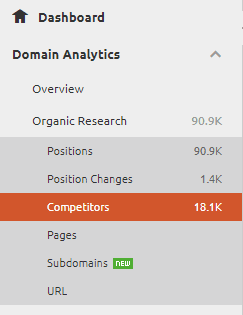
It will display the list of sites and click any site from this list and you will see the keywords for which competitor's site is ranked in the search engines.
To learn what keywords related to your site that other companies are using to display ads in the search engines, enter your site URL in the search line and select the "Overview".
Scroll down and there you will see what companies are selling similar kind of products or services. To know for which keywords they are buying this traffic exactly, click any of them and you will be taken to another tab where you will be able to view ad keywords.
If you want lots of keyword suggestions with corresponding search volume for each of them, then click on "Keyword research". There you will find Phrase match report and Related keywords report which will give you that information.
Step 2: Use competitor analysis to your advantageWhen it comes to marketing, competitor analysis plays a vital role. Without competitor analysis, it's not possible to understand which channels to target and what strategy to follow in order to generate the maximum conversions. SEMrush will let you analyze who your main competitors are and what keywords are providing them with the bulk of their traffic.

Knowing what keywords your main competitors are ranking for, helps you to optimize pages on your own site using these keywords. You can also try to dominate for keywords your competition is not using.
Step 3: Build authority backlinks using the Skyscraper techniqueThe skyscraper technique which is highly popularized by the famous blogger, Brian Dean helps in building a massive audience. It is a three step process.
#1. Find link-worthy content around a topic with search volume: It is the content that is highly incredible and useful that people can't help but login to their WordPress dashboard and add a link to your site. So, find content that already generated a ton of links.
How can you do it?
#2. Make something even better: Publishing longer content usually helps. For better results, take an outdated content and color it with new information. That is update it with cutting-edge content.
Sometimes, a visually stunning piece of content can generate a lot more links and social shares. So, create a better design and add to your content.
Longer content with design that is also updated with useful and helpful information make your content worth reading.
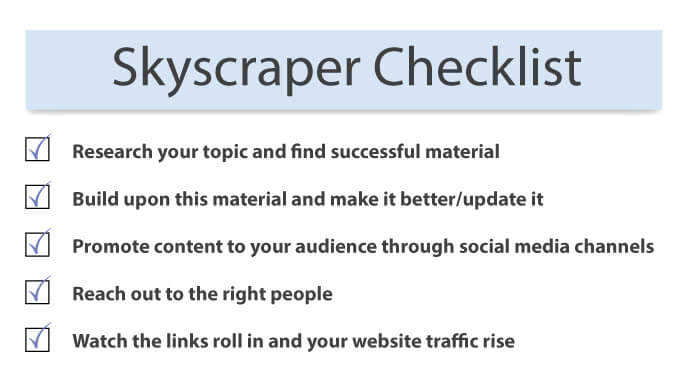
#3. Reach out to the right people to generate the links needed to rank: If you are forgetting email outreach then probably you are losing potential links. Instead of emailing random people, reach out to site owners who already linked out to similar content.
Here is how you can do that:
Getting response from all of them may not be possible but you will definitely get from few and I say that matters too. Because it is always about quality not quantity.
Step 4: Analyze your website traffic sourcesNo matter what your niche is, you need to get readers to read your content. Traffic is a broad indicator that shows how your content is performing. Measure your traffic across several channels and see how that traffic relates to your core product or service. With Google Analytics and SEMrush, you can check your website traffic sources.
Here are six different channels that you should check:
Well, how to find this data?
#1. Find out where your traffic originates: Go to Google Analytics and click on the tab labeled "Acquisition." There you can get an overview of your traffic. You can see a pie chart displaying your top referring channels.
Now, click on the individual channels to view the traffic breakdown for each one. You can either export this data from Google Analytics or create a spreadsheet of your own.
#2. Tag your email links to get your email traffic data: With Google Analytics, you can integrate email management systems. If you choose to set it up manually, then go to Google's URL builder to set specific parameters for the links in your email campaigns. Keep "email" under campaign medium.
#3. Track your email traffic: To create a new segment, click on "Personal Tools and Assets." and then click on "Segments." Name your segment and set the medium to "Email." Go to "Acquisition" to see page views, bounce rates and new users under the email medium. You can add this to spreadsheet.
#4. Track offline campaign: Offline campaigns like in-person events are proven to be one of the most effective marketing channels. Here are some tips that will help you in measuring the impact of offline channels.
Without proper tracking, whatever the search campaign you do, it won't fetch you any kind of opportunity. You need to track the progress of a search marketing campaign. Set up a tracking campaign so that you can clearly see the effect of your campaign on the website's visibility.
SEMrush offers "Position Monitoring" tool that will help you in monitoring and reporting on the progress of a search marketing campaign. Here's how it looks like:

If you want to measure the success of an SEO, PPC or content marketing campaign of if the goal of your campaign is to increase visibility by acquiring higher rankings on Google for your target keywords, then Position Tracking will help you with all these tasks.
In addition to that, these are some of the things that Position Tracking tool can do to you:
Not everyone who blogs gets MASSIVE traffic from search engines. It takes a ton of time, efforts and most importantly a proper SEO strategy.
Here's where how you implement your SEO strategy plays a crucial role. Luckily with tools like SEMrush, Google Keyword Planner etc you can build a solid SEO strategy that not only increase your search traffic but also your sales.
So what are your thoughts about this tutorial? Is your SEO strategy any good? Did you find SEMrush helpful for creating a SEO strategy? Let me know your thoughts in the comments.


0 comments: